
Streamline Data Privacy Risk with AI
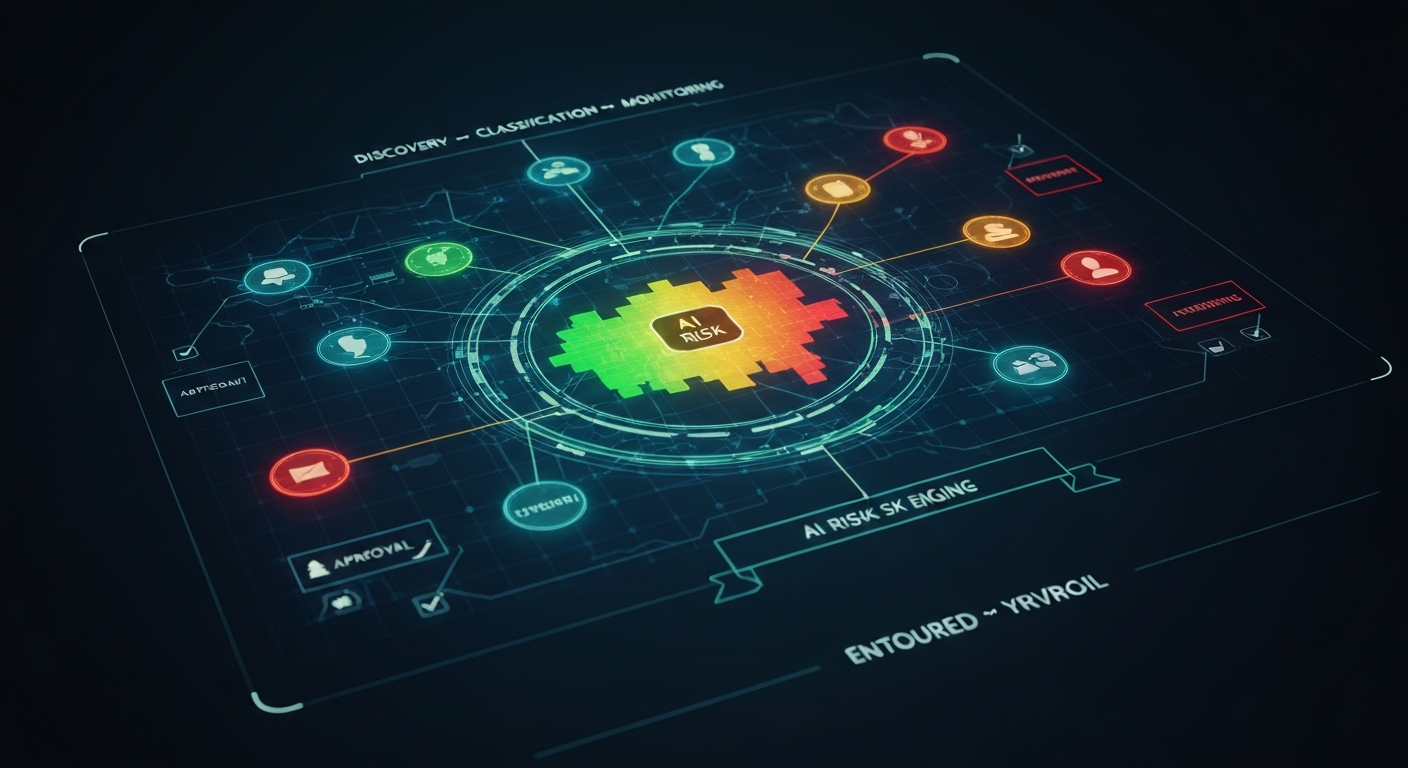
Organizations today are drowning in data and complexity. As data footprints expand across cloud platforms, SaaS applications, analytics stores, and edge devices, traditional approaches to data privacy risk management fail to keep up. This article explains how artificial intelligence (AI) provides scalable, practical approaches to discover sensitive information, map flows, continuously monitor risk, and automate evidence collection—helping privacy, legal, and security teams move from reactive firefighting to proactive risk reduction.
Why data privacy risk management is hard to scale
Scaling privacy programs is not just a technology challenge—it’s an organizational and operational one. Three structural barriers repeatedly derail efforts to manage risk across the enterprise: fragmented data assets and incomplete inventories, manual assessments that quickly become stale, and inconsistent controls, evidence, and reporting. Each of these amplifies the others, producing blind spots and audit exposure.
Fragmented data and incomplete inventories
Most companies lack a single source of truth for where personal or sensitive data lives. Data is distributed across databases, data lakes, SaaS apps, file shares, and ephemeral pipelines. Inventories built manually or via spreadsheets are brittle: they capture a snapshot for a point-in-time assessment but miss newly provisioned systems, overlooked data stores, or shadow IT. Without accurate inventories, teams cannot prioritize privacy risk, perform meaningful impact assessments, or enforce consistent controls.
Manual assessments that don’t keep up with change
Privacy assessments often rely on questionnaires, interviews, and point-in-time scans. Those approaches are time-consuming and don’t scale with rapid product releases, dynamic cloud infrastructure, or real-time data processing. A one-off Data Protection Impact Assessment (DPIA) may be accurate for a week—then the underlying processing changes. This lag leads to either excessive risk tolerance or resource-intensive rework.
Inconsistent controls, evidence, and reporting
Even when teams identify risks, translating findings into consistent controls and audit-ready evidence is difficult. Controls can be implemented in different systems with varying enforcement models; evidence is stored in disparate formats; and reporting across compliance frameworks is manual. These inconsistencies increase the workload for privacy teams and reduce confidence in governance outcomes.
How AI streamlines data privacy risk management
AI is not a silver bullet, but when applied intentionally it addresses the scalability challenges above. AI can automate discovery, classify data sensitivity, infer lineage and impact, and provide continuous monitoring—enabling privacy and security teams to act faster and more confidently. Below are practical AI-driven capabilities that transform how organizations manage privacy risk.
Automating data discovery and sensitivity classification
AI models—especially natural language processing (NLP) and pattern-recognition models—can scan repositories, metadata, and content to identify personal data, sensitive attributes, and contextual signals. Compared to regex-based scans, AI-based classification improves recall (finding more sensitive items) and precision (reducing false positives) by understanding context, synonyms, and local formats. Automated classification enables:
- Rapid, continuous inventory updates across structured and unstructured stores.
- Context-aware sensitivity labels (e.g., distinguishing user IDs from account numbers).
- Automated tagging for downstream enforcement by DLP or access control systems.
Mapping data flows with AI-assisted lineage and impact analysis
Understanding how personal data moves—ingestion, transformation, storage, and sharing—is critical for DPIAs and breach response. AI-assisted lineage leverages metadata, schema inference, code analysis, and process logs to infer upstream and downstream relationships between datasets. By combining probabilistic models with human validation, teams can build dynamic data flow maps that show where sensitive elements travel, which processes alter them, and which third parties receive them.
Continuous monitoring via anomaly detection and risk scoring
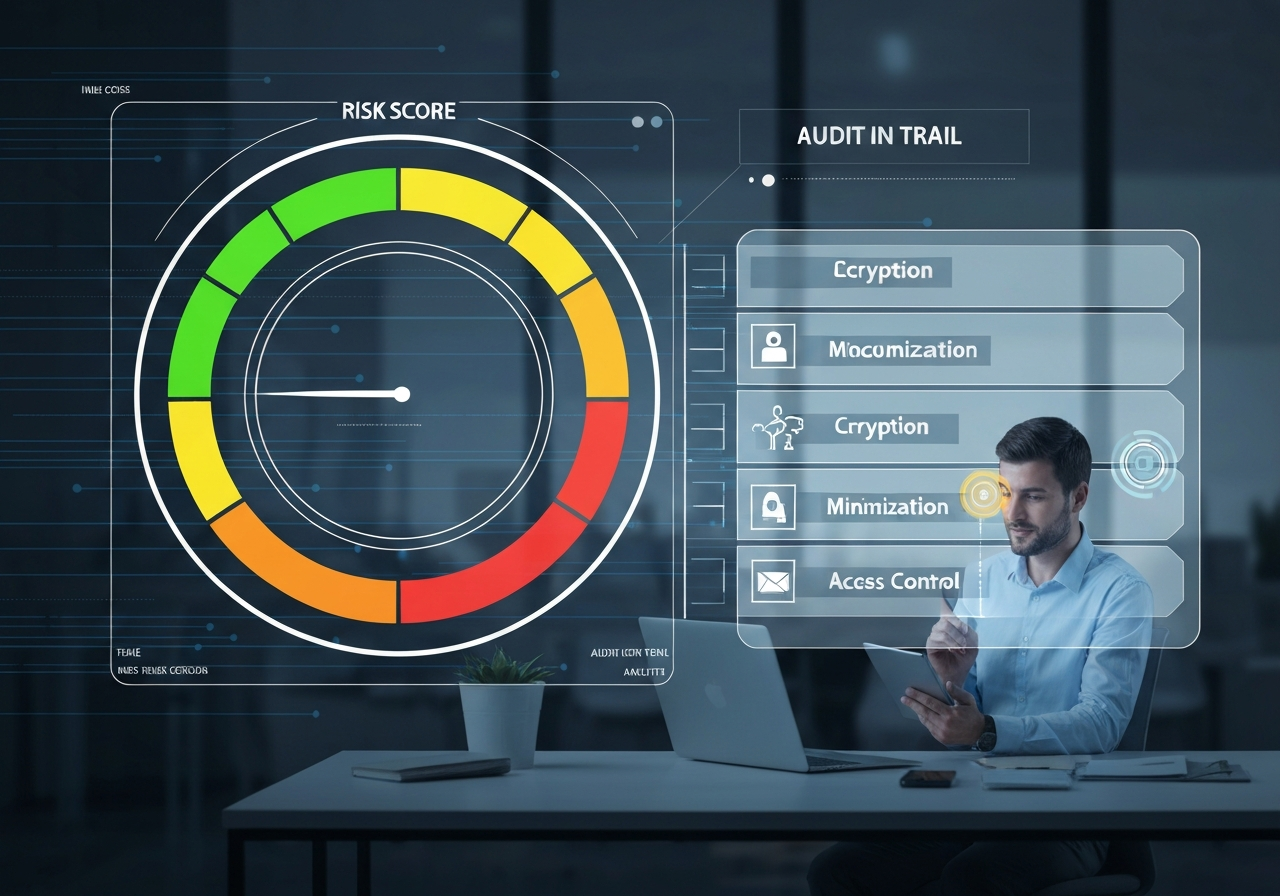
AI enables continuous risk-aware monitoring using behavioral baselines and anomaly detection. Models can flag unusual data access patterns, exfiltration attempts, or sudden increases in sensitive data exposure. Risk scoring synthesizes classification, lineage, access patterns, and control posture into a single prioritization metric, helping teams focus limited resources on the highest-impact findings rather than sifting through noise.
Core use cases: from risk identification to mitigation
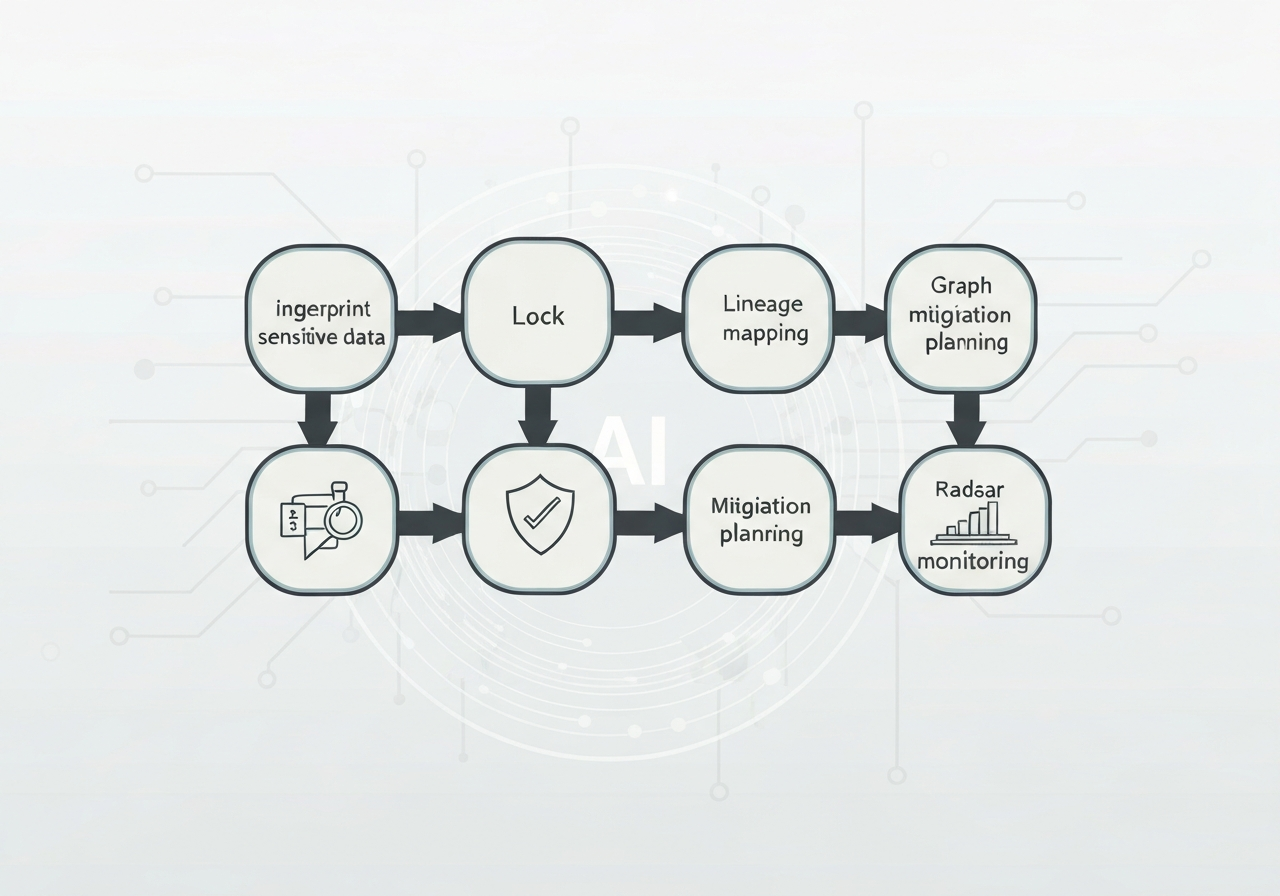
AI-driven privacy tooling supports a chain of capabilities from detection to remediation. Below are core use cases where AI changes outcomes for privacy teams, backed by measurable improvements in speed and accuracy.
Identifying high-risk datasets and processing activities
By combining classification and lineage, AI surfaces datasets that contain high concentrations of sensitive attributes and identifies processing activities that increase exposure (e.g., wide access controls, exports to vendors, or public-facing endpoints). Instead of reactive discovery, teams gain proactive visibility into high-risk assets, enabling targeted controls or data minimization before incidents occur.
Evaluating compliance gaps and control effectiveness
AI can automatically compare discovered processing activities against policy templates and regulatory requirements (e.g., GDPR, CCPA). This highlights gaps—missing legal bases, absence of DPIAs, or weak encryption—and assesses control effectiveness using telemetry (access logs, encryption states, masking). Automated evidence collection shortens the audit cycle and reduces manual work during compliance assessments.
Supporting incident response with faster triage and evidence
When incidents occur, time-to-triage is critical. AI accelerates triage by quickly identifying impacted datasets, mapping who accessed the data, and assembling relevant logs and artifacts. Pre-built playbooks can recommend containment actions and generate audit-ready evidence packages, reducing mean-time-to-resolution and improving regulator communications.

Governance, privacy, and safety for AI-driven risk management
Deploying AI for privacy risk requires governance to ensure reliability, fairness, and transparency. Three governance areas are particularly important: human-in-the-loop (HITL) review and explainability, model risk management, and ensuring AI tools don’t unintentionally increase data exposure.
Human-in-the-loop review and explainability requirements
AI should augment, not replace, human judgment for privacy decisions. HITL workflows allow analysts to validate model outputs, correct labels, and capture rationale. Explainability is crucial: teams need traceable reasons for a classification or score to defend decisions during audits or regulatory inquiries. Combining confidence scores with rationale snippets and provenance helps build trust.
Model risk management: validation, drift monitoring, and testing
Treat privacy models like any other regulated model: validate them against labeled ground truth, test for drift over time, and monitor performance metrics. Establish routines to refresh training sets, evaluate false positive/negative rates, and run synthetic scenarios (e.g., novel data formats) to ensure models behave as expected under change.
Ensuring AI doesn’t expand data exposure (least privilege, secure pipelines)
AI pipelines often require access to data for training and inference. Apply least-privilege principles, encrypt data at rest and in transit, and use privacy-preserving techniques (tokenization, differential privacy, or synthetic data) where feasible. Maintain audit trails for model training datasets and ensure that tooling does not create new aggregation points that increase attack surface.
Implementation roadmap: getting from pilots to production
Moving AI-driven privacy capabilities from proof-of-concept to production requires deliberate steps: choose high-value workflows, integrate with existing tooling, and ensure audit-ready documentation. A phased approach reduces risk and demonstrates measurable value early.
Start with high-value workflows and measurable success criteria
Begin with specific use cases that have clear ROI: reducing time-to-assess for DPIAs, decreasing manual classification hours, or shortening incident triage. Define success metrics up front (e.g., reduce assessment time by X%, increase classification recall by Y%) and run focused pilots to validate the approach before broad rollout.
Integrate with existing GRC, DLP, SIEM, and data catalog tools
AI capabilities achieve the most value when they feed existing governance, risk, and compliance (GRC) platforms, Data Loss Prevention (DLP), Security Information and Event Management (SIEM), and data catalogs. Integration enables automation of policy enforcement, incident alerting, and centralized reporting without forcing teams to abandon established workflows.
Build audit-ready documentation: evidence capture and traceability
From the outset, design systems to capture evidence: classification decisions, lineage mappings, model versions, human review actions, and remediation steps. Ensure traceability so any finding can be reconstructed for auditors or regulators. Automated logs and standardized artifacts reduce the manual burden during assessments and support continuous improvement.
KPIs to prove impact in data privacy risk management
Tracking the right KPIs demonstrates the business value of AI-driven privacy programs. Focus on metrics that reflect speed, coverage, accuracy, and outcome improvements.
Time-to-assess and time-to-remediate risk findings
Measure how long it takes to discover and assess a risk and how long it takes to remediate. AI should reduce both metrics: faster discovery via automated scans and faster remediation via prioritized, evidence-backed workflows. Present before-and-after timelines to stakeholders.
Coverage and accuracy: classification precision and risk detection rates
Track coverage (percentage of systems scanned or datasets inventoried) and model accuracy metrics (precision, recall, F1 for classification). Improvement in these metrics shows that the tooling finds more relevant risks while maintaining manageable false positives.
Reduced incidents and improved audit outcomes
Ultimately, the program should reduce privacy incidents and improve audit outcomes: fewer regulatory findings, faster audit responses, and demonstrable adherence to privacy-by-design principles. Translate these improvements into risk reduction and cost avoidance for leadership.
Common pitfalls and how to avoid them
Even well-intentioned AI projects can fail. Here are common pitfalls and practical ways to avoid them when implementing AI for data privacy risk management.
Over-reliance on AI scores without governance and review
Pitfall: Treating AI outputs as authoritative and automating decisions without human oversight. Mitigation: Embed HITL checkpoints for high-risk decisions, require human sign-off for remediation that affects customers, and use confidence thresholds to route ambiguous cases for review.
Neglecting data quality, labeling, and ground-truth validation
Pitfall: Training or validating models with noisy or unrepresentative labels leads to poor performance. Mitigation: Invest in high-quality labeling, curate representative datasets, and continuously validate models against ground truth samples. Periodic re-labeling and active learning help models adapt.
Underestimating change management and stakeholder adoption
Pitfall: Technology is deployed but teams don’t adopt it because workflows haven’t changed or benefits aren’t clear. Mitigation: Engage stakeholders early, provide role-based training, align KPIs with organizational goals, and demonstrate quick wins to build momentum.
AI can transform how organizations handle data privacy risk management, but success requires integrating technology with governance, strong validation practices, and a clear roadmap to production. By automating discovery, mapping lineage, monitoring continuously, and preserving human oversight, privacy teams can scale their programs, reduce exposure, and prove measurable impact to regulators and executives.