

Data Privacy Risks: AI Solutions
Data privacy is no longer a back-office checkbox. It is a frontline business imperative, shaped by dynamic threats, complex data ecosystems, and evolving regulations. Organizations need visibility into where sensitive data resides, how it moves, and who touches it. AI-powered risk assessment offers a modern lens to detect, quantify, and remediate privacy threats at scale. This article maps the privacy landscape, explains how AI augments traditional controls, and provides a pragmatic path to build trust while accelerating innovation.
Understanding Data Privacy Risks
Privacy risk is the likelihood and impact of inappropriate access, disclosure, or misuse of personal data. As enterprises collect more data across apps, clouds, and vendors, the attack surface expands. A clear understanding of adversaries, process gaps, and lifecycle exposures is the starting point for effective control design and AI-driven prioritization.
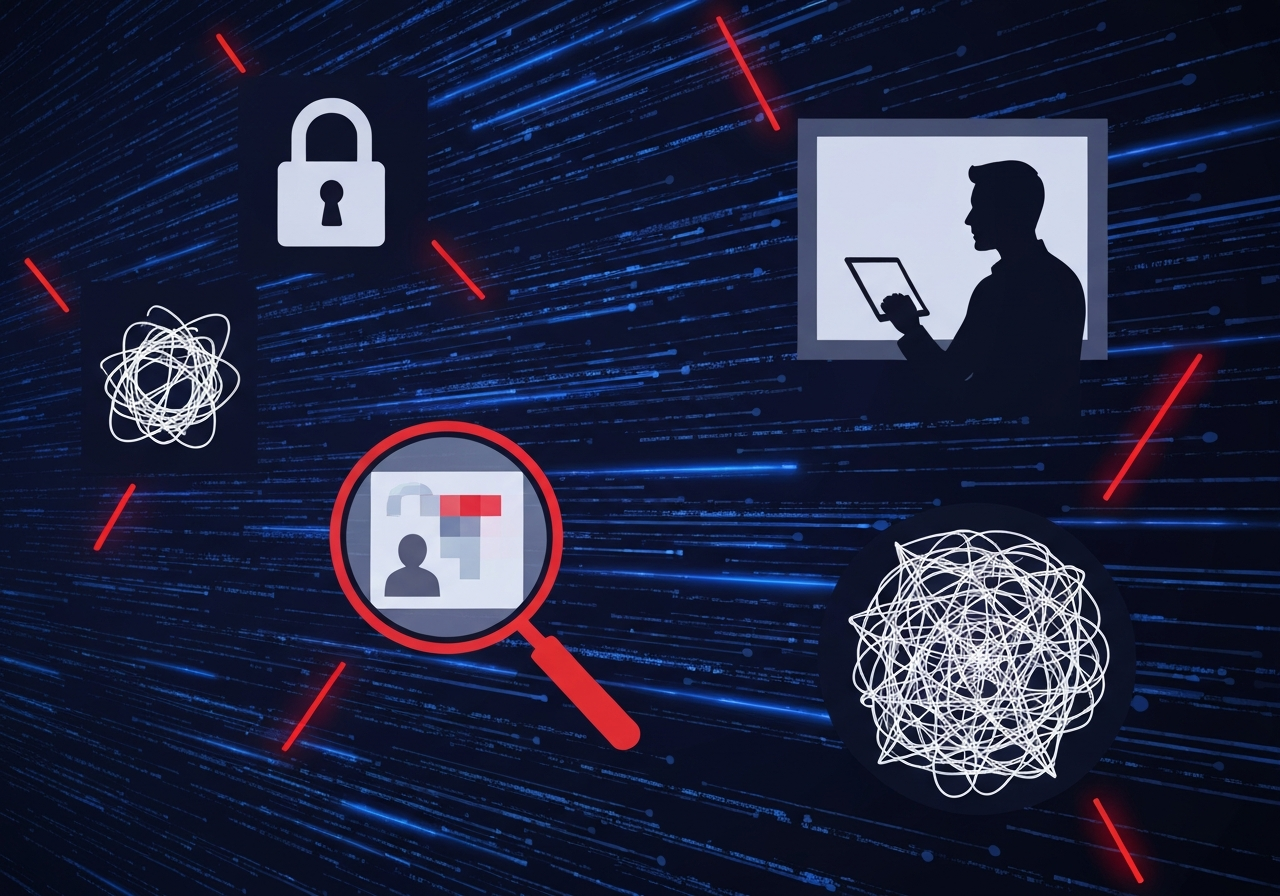
Common threats: breaches, insider risk, and re-identification
Breaches range from credential stuffing to ransomware, often exploiting weak identity controls and unpatched systems. Insider risk stems from overprivileged users, shadow IT, or careless handling of files and exports. Re-identification attacks combine datasets to uncover a person behind anonymized records. AI-powered risk assessment helps surface anomalous behavior, detect toxic combinations of data, and flag patterns that precede exfiltration or identity linkage.
Data lifecycle vulnerabilities: collection, storage, processing, sharing, deletion
Risk shifts at each lifecycle phase. Collection may exceed consent or involve unnecessary data. Storage introduces misconfigurations, weak encryption, or long retention. Processing can repurpose data beyond stated use. Sharing with vendors can magnify exposure through third-party gaps. Deletion failures keep data longer than needed. A lifecycle-aware AI model learns normal flows, monitors policy adherence, and highlights when location, purpose, or parties deviate.
Business impact: financial, legal, and reputational consequences
Consequences include regulatory fines, breach notification costs, and legal settlements. Operational disruption, incident response expenditures, and cyber insurance impacts add up. Reputational damage reduces customer trust and sales, and impairs partnerships. By quantifying exposure likelihood and materiality, AI-powered risk assessment helps security, privacy, and compliance leaders target controls that deliver measurable risk reduction and business resilience.
What Is AI-powered Risk Assessment?
AI-powered risk assessment uses machine learning and statistical models to continuously evaluate privacy exposures across data, users, systems, and vendors. It enriches signals, detects anomalies, and automates triage. Unlike point-in-time audits, AI provides adaptive, context-aware insights that keep pace with data velocity and changing threats.
Core components: models, feature engineering, and data sources
Core components include supervised and unsupervised models, features derived from logs and metadata, and data sources such as DLP alerts, IAM data, SIEM events, cloud storage configs, and data catalogs. Feature engineering encodes user roles, data sensitivity, access frequency, geolocation, time-of-day, and data lineage. The system correlates signals, enriches with business context, and outputs risk scores and recommendations.
Techniques used: anomaly detection, NLP for sensitive content, and predictive modeling
Anomaly detection spots irregular access patterns, abnormal data flows, and rare privilege escalations. NLP classifies sensitive content by detecting PII, PHI, PCI, and secrets in files, tickets, and chat. Predictive modeling estimates breach likelihood, re-identification risk, and vendor exposure based on historical incidents and control maturity. Together, these techniques create early warnings that complement policy-based controls.
How AI complements traditional privacy assessments and DPIAs
DPIAs and risk assessments remain essential for documenting purposes, legal basis, and safeguards. AI augments them by providing continuous evidence, real-time risk signals, and automation. It surfaces emerging hazards between audit cycles, supplies artifacts for DPIA updates, and drives prioritized remediation. The result is a living risk program that aligns documentation with operational reality.
How AI-powered Risk Assessment Detects and Mitigates Risks
Detection without action frustrates teams. Effective programs pair automated monitoring with contextual scoring and streamlined remediation. AI brings speed and precision, enabling privacy and security teams to focus on the highest-value work while reducing alert fatigue.
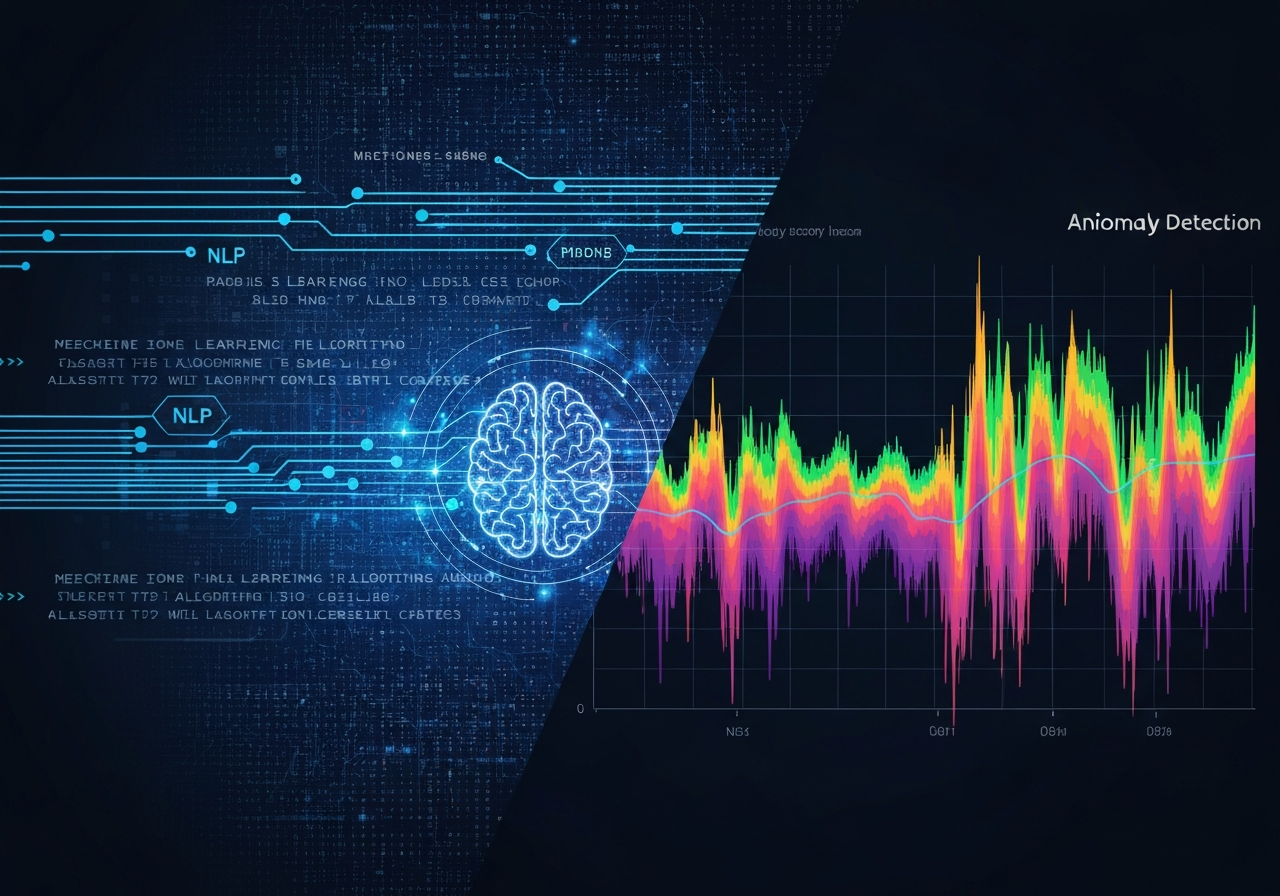
Real-time monitoring and alerting for anomalous access and data flows
AI ingests identity logs, cloud storage events, data movement telemetry, and endpoint signals to learn normal behavior. It flags unusual downloads, sudden permission changes, cross-border transfers, and bulk queries of sensitive fields. Real-time alerts can be routed to SOC and privacy analysts with context such as user role, data classification, historical activity, and potential regulatory impact.
Contextual prioritization: scoring and triage of risks
Not all alerts are equal. AI-powered risk assessment assigns scores by combining sensitivity of data, user trust level, control posture, and potential legal exposure. Analysts see a prioritized queue with enrichment: data lineage, vendor involvement, and related incidents. This reduces mean time to detect and investigate, ensuring the riskiest issues receive immediate attention.
Automation options: remediation workflows, data masking, and access controls
Automation accelerates containment. Playbooks can quarantine files, revoke access, disable risky tokens, apply data masking, or trigger encryption at rest. Approval-based flows balance speed with oversight. Integrations with IAM, CASB, DLP, ticketing, and cloud-native controls enable one-click or automated remediation while maintaining audit trails for regulators and stakeholders.
Risks and Limitations of AI Approaches
AI is powerful but not infallible. Responsible design and governance are critical to avoid creating new problems while solving old ones. Understanding model risks and implementing guardrails keeps your program trustworthy and compliant.
Model risks: bias, drift, and adversarial attacks
Models trained on skewed data may overflag certain departments or geographies. Drift occurs as user behavior and systems change, degrading accuracy. Adversaries may craft inputs to evade detection or poison training data. Mitigations include fairness testing, drift monitoring, adversarial robustness checks, and retraining on representative, high-quality datasets with clear version control.
Privacy concerns in training data and model outputs (membership inference, inversion)
Models can inadvertently memorize records, enabling membership inference or model inversion attacks. Use privacy-preserving techniques such as differential privacy, federated learning, data minimization, and secure enclaves. Restrict access to training data, apply rigorous de-identification, and monitor outputs for leakage of sensitive attributes or unique identifiers.
Explainability and auditability challenges for regulators and stakeholders
Opaque models hinder trust. Adopt interpretable features, provide reason codes in alerts, and retain audit logs of data sources, features, model versions, and decisions. Combine global insights with case-level explanations so privacy officers, auditors, and regulators can trace how a risk score or remediation was determined.
Implementation Roadmap and Best Practices
Success requires strong data foundations, robust model operations, and well-rehearsed response processes. Start small with high-value use cases, then scale iteratively with measurable wins and stakeholder buy-in.
Data governance: inventory, classification, and labeling for model inputs
Build an accurate data inventory across cloud and on-prem. Classify data by sensitivity and regulatory domain. Label sources with owners, purposes, retention, and lawful basis. Use data catalogs and lineage mapping to power feature engineering. Quality signals and consistent labels improve model performance and reduce noise.
Model validation, continuous monitoring, and performance KPIs
Validate models with holdout sets and real-world pilots. Track precision, recall, false positives and negatives, time to detect, drift metrics, and risk reduction. Establish model review cadences, bias audits, and rollback plans. Instrument dashboards for privacy, security, and compliance leaders to align on outcomes and thresholds.
Operationalizing remediation: playbooks, roles, and automation
Define who approves, who executes, and when automation is safe. Create playbooks for common scenarios such as misconfigured buckets, overprivileged accounts, and abnormal data exports. Integrate with ticketing for accountability. Measure time to contain, time to close, and repeat occurrences to drive continuous improvement.
Regulatory, Ethical, and Compliance Considerations
AI must work within legal and ethical boundaries. Align technical capabilities with requirements from GDPR, CCPA, HIPAA, and sector-specific mandates, while honoring transparency and data subject rights.
Aligning AI assessments with GDPR, CCPA, HIPAA, and DPIA requirements
Map controls to lawful basis, purpose limitation, data minimization, security, and retention standards. Use AI outputs as evidence in DPIAs and HIPAA risk analyses. Ensure cross-border data flows respect transfer rules. Maintain records of processing for AI-driven monitoring and remediation activities.
Transparency, consent, and data subject rights when using AI tools
Inform users that monitoring occurs to protect data and comply with law. Document privacy notices, consent where applicable, and opt-out mechanisms. Ensure AI systems support access, correction, deletion, and restriction requests by locating and acting on relevant records quickly and accurately.
Ethical governance: fairness, accountability, and third-party risk management
Adopt an ethics charter for AI in privacy. Conduct fairness assessments, set escalation paths, and define accountability. Extend oversight to vendors providing AI tools or handling data. Require attestations, conduct audits, and ensure contracts include security, privacy, and incident obligations.
Measuring Success and Real-World Examples
Measurement demonstrates value and guides iteration. Use business-relevant metrics and share results with executive sponsors to secure ongoing support and budget.
Key metrics: false positives/negatives, time-to-detect, risk reduction, compliance posture
Track alert precision and recall to manage analyst workload. Measure time to detect and time to contain for high-severity events. Quantify risk reduction via decreased sensitive data exposure, fewer open misconfigurations, and improved compliance scores. Tie results to reduced incidents and audit findings.
Short case studies: successful deployments and lessons learned
A fintech reduced account takeover by correlating IAM anomalies with PII access patterns, cutting response time by 60 percent. A healthcare provider used NLP to flag PHI in tickets, auto-masking content and preventing disclosure. A SaaS firm prioritized vendor risks using predictive scoring, accelerating vendor reviews and reducing onboarding delays.
Roadblocks encountered and how teams overcame them
Teams struggled with noisy alerts and data silos. They improved data quality, tuned models with domain features, and added risk-based triage. Governance gaps were addressed by clarifying roles, creating approval workflows, and integrating remediation with IAM and cloud controls. Executive dashboards aligned stakeholders on priorities.
Future Trends and Next Steps
Privacy engineering is entering a new era. Emerging techniques will let teams learn from data without exposing it, while regulations and standards set clearer guardrails for trustworthy AI.

Emerging tech: privacy-preserving ML, federated learning, and synthetic data
Privacy-preserving methods add noise or compute within secure enclaves to protect individuals. Federated learning trains models across endpoints without centralizing raw data. Synthetic data provides statistically similar datasets for testing and analytics without exposing real identities. Combined, these approaches reduce risk while maintaining utility.
Evolving regulatory landscape and standards for AI privacy tools
Regulators are focusing on AI accountability, transparency, and risk management. Expect clearer guidance on automated decision-making, DPIAs for high-risk systems, and technical standards for privacy-preserving ML. Align early with frameworks such as NIST AI Risk Management and ISO privacy standards to future-proof your program.
Recommended next steps for organizations exploring AI-powered risk assessment
Start with a high-impact pilot: sensitive data discovery and anomalous access detection. Build a data inventory, classify assets, and integrate identity logs. Define KPIs and run a 60 to 90 day proof of value. Document governance, explainability, and remediation playbooks. Scale incrementally to vendors, cross-border transfers, and advanced NLP use cases.